Content
Thicker, fuller hair you'll love
Is Minoxidil Safe for Women? Uses, Side Effects, and More

Reviewed by Sara Harcharik Perkins, MD
Written by Sian Ferguson
Published 05/21/2021
Updated 09/30/2025
Key Takeaways
Both topical and oral minoxidil are considered safe for women. They’re effective at treating hair loss.
Topical minoxidil is FDA-approved for the treatment of female pattern hair loss (FPHL) and widely recommended by dermatologists.
Possible side effects of topical minoxidil include scalp irritation, dryness, or temporary shedding when first starting treatment.
Alternatives to minoxidil include oral medications, in-office dermatology treatments, and supportive products like supplements or gentle hair care.
If you’re dealing with thinning hair or noticing more shedding than usual, you’re not alone. Female hair loss is common — and understandably, one of the first questions that comes up is: Is minoxidil safe for women?
The short answer is yes.
The active ingredient in Rogaine®, topical minoxidil is the only medication for female pattern hair loss that’s approved by the Food and Drug Administration (FDA). Oral minoxidil is also used off-label to treat female hair loss.
Here’s what you need to know about using minoxidil as a woman.
Content
Can Women Use Minoxidil?
Absolutely. Minoxidil is one of the most trusted and widely studied hair loss treatments available. It comes in topical and oral formulations.
The American Academy of Dermatology recommends topical minoxidil to treat hair loss in women. It can also help with other types of hair loss, such as telogen effluvium.
Originally developed as an oral medication for high blood pressure (hypertension), minoxidil was later discovered to stimulate hair growth. Today, it’s available in topical and oral forms:
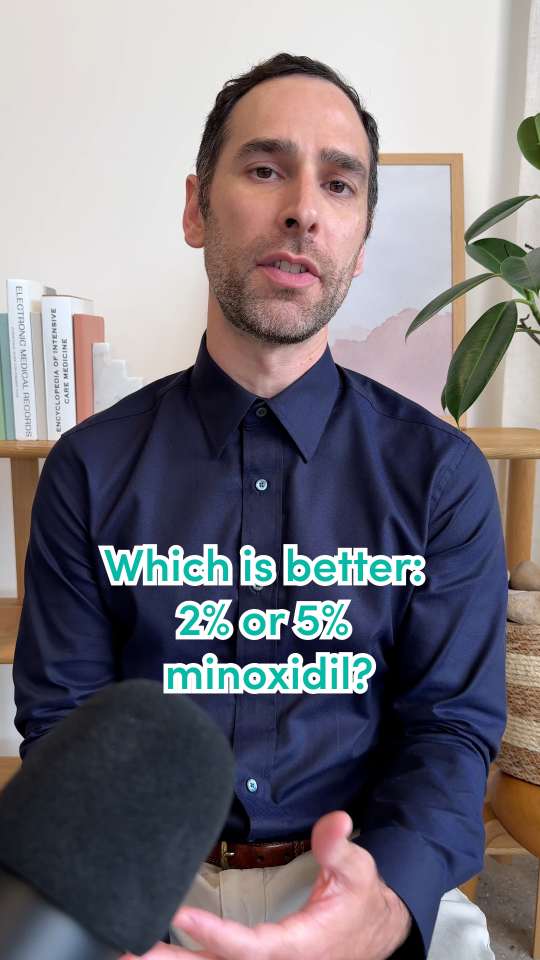
Topical minoxidil (2% minoxidil solution or 5% minoxidil foam). Topical minoxidil is FDA-approved for female hair loss. Available over-the-counter, topical minoxidil is safe and effective for both men and women.
Oral minoxidil. Although it’s not FDA-approved for treating hair loss in women, low-dose oral minoxidil is sometimes prescribed off-label. Research suggests oral minoxidil is safe for female pattern hair loss.
How does minoxidil work for hair loss?
It widens blood vessels. By improving blood flow in the scalp, minoxidil helps hair follicles get more nutrients and oxygen.
It extends the growth cycle. Minoxidil helps keep follicles in the anagen phase (growth phase) longer, which supports thicker, fuller strands.
Placebo-controlled trials have found that minoxidil is both safe and effective at treating hair loss in women and men.
Topical minoxidil is available over the counter. Oral minoxidil is available by prescription only.
You can buy topical minoxidil without a prescription, making it one of the most accessible hair regrowth treatments available. However, it’s still advisable to speak with a healthcare professional — like a dermatologist or doctor — if you’ve noticed hair loss.
Knox Beasley, MD, a board-certified dermatologist, says the first step in treating hair loss is to figure out what’s causing it. “First, we have to determine the diagnosis, which we do by asking questions,” he says. A healthcare provider might ask about your symptoms, when you started noticing hair fall, and whether you’re going through any life changes.
“A thorough scalp exam is important as well,” he adds. “Then, we have a discussion about the potential causes of their hair loss and what treatment options would work best to stop and potentially reverse the hair loss,” Dr. Beasley says. This might include minoxidil or another medication.
When considering minoxidil, you’ll usually choose between the 2 percent topical solution, the 5 percent topical foam, or (in some cases) oral minoxidil. Here’s what to keep in mind:
2% Minoxidil Solution | 5% Minoxidil Foam | Oral Minoxidil | |
|---|---|---|---|
Application | Twice daily (liquid drops with dropper) | Once daily (foam) | Daily pill (prescription, off-label) |
Ease of Use | Precise, targeted | Quick, less messy | No topical application needed |
Effectiveness | Effective for regrowth | May lead to more noticeable regrowth | Promising results in studies, especially if topical isn’t tolerated |
Side Effects | More irritation possible (contains propylene glycol) | Usually fewer side effects | Higher risk of systemic side effects (e.g., swelling, dizziness, unwanted body hair) |
FDA-Approved for Women | Yes | Yes | No (off-label only) |
Available over the counter? | Yes | Yes | No (prescription only) |
Possible Minoxidil Side Effects
Most women tolerate minoxidil well, but side effects are possible. They vary depending on whether you’re using topical or oral minoxidil.
Topical minoxidil side effects may include:
Scalp irritation, itching, or flaking
Dryness or mild burning sensation
Contact dermatitis (allergic reaction to ingredients)
Unwanted hair growth (hypertrichosis) on the face or hands if the product drips
Temporary shedding when starting treatment
Oral minoxidil side effects may include:
Dizziness or lightheadedness
Swelling in the hands, ankles, or feet (fluid retention)
Increased heart rate (tachycardia)
Unwanted body hair growth
Oral minoxidil may also come with rare but serious side effects like chest pain, shortness of breath, or changes in blood pressure. It’s also possible, albeit uncommon, to have an allergic reaction to oral minoxidil.
If you notice severe side effects — especially chest pain, fainting, or difficulty breathing — stop using minoxidil and seek medical attention right away.
Minoxidil is not an overnight fix. It usually takes months of consistent use before you see results.
“It takes about six months to see results from any hair loss medication,” Dr. Beasley says. For this reason, he suggests having a follow-up appointment with your healthcare provider around this time to reevaluate the situation and, if necessary, adjust your regimen.
Be patient, and remember that consistency matters: If you stop using minoxidil, hair loss usually returns.
Alternatives to Minoxidil for Women
If minoxidil isn’t working for you — or if side effects make it difficult to continue — there are other treatment options for female pattern hair loss:
Spironolactone, a prescription medication that can help with hormonally driven hair loss.
Finasteride, sometimes prescribed off-label for postmenopausal women.
Platelet-rich plasma (PRP) therapy, an in-office procedure that uses your own blood plasma to stimulate hair growth.
Hair transplants, a surgical option for severe thinning or baldness.
Red light therapy, treatment that uses low-level lasers to promote hair growth.
Hair supplements such as biotin, which may help support overall hair health.
Hair care products, like thickening shampoos and conditioners, to support healthy hair growth as you shower.
Although there are many natural remedies for hair loss, Dr. Beasley says he doesn’t typically recommend these. “The success stories for people using only natural or alternative treatments are few and far between,” he says.
“If a patient of mine tells me they’re using a natural remedy and it’s helping their hair grow, I tell them to keep using it!” he adds. “I do recommend using an evidence-based treatment regimen in addition.”
If you’re not sure which treatment (or treatments) would work best for you, the best approach is to speak with a healthcare provider.
Yes, minoxidil is safe for women. Here’s what you need to keep in mind:
Both topical and oral minoxidil are well-studied and considered safe for most women.
Topical minoxidil (2 percent solution or 5 percent foam) is FDA-approved for treating female pattern hair loss. Some women find the foam more convenient and effective.
Oral minoxidil may be prescribed off-label for female pattern hair loss.
A healthcare professional can help you weigh your options, and Hers makes it simple to connect with someone. Use our platform to find a provider and see if minoxidil is right for you.
FAQs
What happens if women use 5% minoxidil?
Women can safely use 5 percent minoxidil. In fact, studies suggest it may be more effective than the 2 percent solution. Some women may notice mild irritation, but overall, it’s considered safe and FDA-approved for female use.
Can women use minoxidil while breastfeeding?
There isn’t enough research to confirm the safety of minoxidil during breastfeeding or pregnancy. It’s best to talk with a healthcare professional before starting or continuing use.
How long should women use minoxidil?
Most women need to use minoxidil long-term to maintain results. If treatment is stopped, hair loss typically returns within a few months.
Does minoxidil work for all types of hair loss?
Minoxidil is most effective for female pattern hair loss (androgenetic alopecia). It may not work as well for hair loss caused by scarring, certain medical conditions, or stress.
What is the difference between Rogaine® and minoxidil?
Rogaine® is a brand-name treatment that contains minoxidil. Minoxidil is a generic medication.
Is oral minoxidil safe for women?
Oral minoxidil can be safe for women, particularly when prescribed at low doses, but it’s not FDA-approved for hair loss and carries more risks than topical minoxidil. It should only be used under medical supervision.
11 Sources
- American Academy of Dermatology Association. (2022). Hair loss: Diagnosis and treatment. https://www.aad.org/public/diseases/hair-loss/treatment/diagnosis-treat
- Blume-Peytavi U, et al. (2011). A randomized, single-blind trial of 5% minoxidil foam once daily versus 2% minoxidil solution twice daily in the treatment of androgenetic alopecia in women. https://pubmed.ncbi.nlm.nih.gov/21700360/
- Dinh QQ, et al. (2007). Female pattern hair loss: Current treatment concepts. https://www.ncbi.nlm.nih.gov/pmc/articles/PMC2684510/
- Ho CH, et al. (2024). Androgenetic alopecia. https://www.ncbi.nlm.nih.gov/books/NBK430924/
- Iamsumong W, et al. (2020). Finasteride and its potential for the treatment of female pattern hair loss: Evidence to date. https://www.ncbi.nlm.nih.gov/pmc/articles/PMC7060023/
- Patel P, et al. (2024). Minoxidil. https://www.ncbi.nlm.nih.gov/books/NBK482378/
- Ramírez-Marín H, et al. (2022). Role of Oral minoxidil in patterned hair loss. https://www.ncbi.nlm.nih.gov/pmc/articles/PMC9650732/
- Ramos P, et al. (2019) Minoxidil 1 mg oral versus minoxidil 5% topical solution for the treatment of female-pattern hair loss: A randomized clinical trial. https://www.jaad.org/article/S0190-9622(19)32666-0/fulltext
- Rodrigues-Barata R, et al. (2020). Low-dose oral minoxidil for female pattern hair loss: A unicenter descriptive study of 148 women. https://pubmed.ncbi.nlm.nih.gov/32656239/
- Rossi A, et al. (2012). Minoxidil use in dermatology, side effects and recent patents. https://pubmed.ncbi.nlm.nih.gov/22409453/
- Suchonwait P, et al. (2019). Minoxidil and its use in hair disorders: A review. https://www.ncbi.nlm.nih.gov/pmc/articles/PMC6691
Editorial Standards
Hims & Hers has strict sourcing guidelines to ensure our content is accurate and current. We rely on peer-reviewed studies, academic research institutions, and medical associations. We strive to use primary sources and refrain from using tertiary references. See a mistake? Let us know at blog@forhims.com!
This article is for informational purposes only and does not constitute medical advice. The information contained herein is not a substitute for and should never be relied upon for professional medical advice. Always talk to your doctor about the risks and benefits of any treatment. Learn more about our editorial standards here.
Sara Harcharik Perkins, MD
Education
Bachelor of Arts, Biology, Economics, and Chemistry - University of Pennsylvania | College of Arts and Sciences, 2009
Doctor of Medicine - Icahn School of Medicine at Mount Sinai, 2014
Training
Internship, Internal Medicine | Massachusetts General Hospital, 2015
Residency, Dermatology | Yale New Haven Hospital, 2018
Medical Licenses
Connecticut, 2015
Board Certifications
Affiliations & Memberships
Specialties & Areas of Focus
Acne, hair loss, telemedicine, medical dermatology
Years of Experience
7
Previous Work Experience
Instructor - Department of Dermatology | Yale School of Medicine, 2018
Physician - VA Connecticut Healthcare System, 2018–
Assistant Professor - Department of Dermatology | Yale School of Medicine, 2019–
Publications & Research
Title: Characterization of electronic medical record patient portal messaging and the impact of the COVID-19 pandemic: A single institution experience.
Published in: Journal of the American Academy of Dermatology
Date: 2025
URL: https://www.sciencedirect.com/science/article/abs/pii/S0190962224030500
Title: Enduring gaps in representation: A comprehensive reanalysis of skin of color in popular medical education materials
Published in: Journal of the American Academy of Dermatology
Date: 2025
URL: https://www.sciencedirect.com/science/article/abs/pii/S0190962224030317
Title: Variation in state Medicaid coverage for asynchronous e-visits and e-consults
Published in: Journal of the American Academy of Dermatology
Date: 2025
URL: https://www.sciencedirect.com/science/article/abs/pii/S0190962224028718
Title: The impact of COVID-19 on the dermatologic care of nonmelanoma skin cancers among solid organ transplant recipients
Published in: Journal of the American Academy of Dermatology International
Date: 2023
URL: https://www.sciencedirect.com/science/article/pii/S2666328723001293
Title: Delays in melanoma presentation during the COVID-19 pandemic: A nationwide multi-institutional cohort study
Published in: Journal of the American Academy of Dermatology
Date: 2022
Quotes or Expert Insights
“Applying sunscreen every day is the most important thing you can do to keep your skin looking healthy and prevent skin cancer” | Time Magazine
Media Mentions & Features
Do Eye Creams Actually Work for Wrinkles? | Ask Well | The New York Times
Why I Practice Medicine
I love practicing medicine because it allows me to blend science, empathy, and problem-solving to improve my patients’ lives in tangible, visible ways. It’s so rewarding when patients feel seen, understood, and confident in their skin.
Hobbies & Interests
Spending time with my children, DIY projects, running
Professional Website or Profile
Related Conditions
 Alopecia Areata
 Dandruff
 Itchy Scalp
 Folliculitis
 Scalp Psoriasis
 Hair Loss